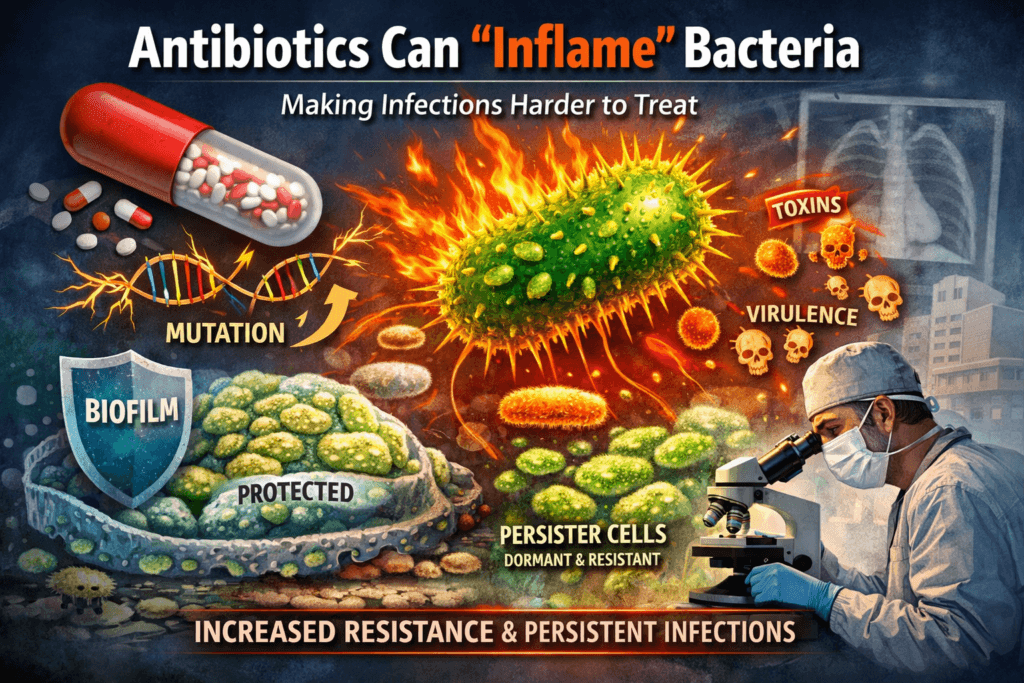
Discover how antibiotics can sometimes “inflame” bacteria, increasing resistance and making infections harder to treat. Learn causes, mechanisms, and prevention strategies.
Introduction
Antibiotics are one of the greatest breakthroughs in medical science, saving countless lives from bacterial infections. However, new research is challenging the traditional view of how these drugs work. Surprisingly, antibiotics can sometimes “inflame” bacteria, triggering survival mechanisms that make infections more stubborn and difficult to treat.
This phenomenon is becoming increasingly important in the era of antibiotic resistance, where improper use of antibiotics may do more harm than good.
What Does “Inflaming” Bacteria Mean?
The term “inflame” is used metaphorically. It does not refer to inflammation in the human body, but rather to a heightened state of bacterial activity and defense.
When bacteria are exposed to:
- Low doses of antibiotics
- Incomplete treatment courses
- Inappropriate antibiotic selection
they may not die. Instead, they activate stress responses that help them survive, adapt, and even become stronger.
Key Mechanisms Behind This Effect
1. Bacterial Stress Response (SOS Response)
Antibiotics can damage bacterial DNA. In response, bacteria activate the SOS response, which:
- Repairs damaged DNA
- Increases mutation rates
- Accelerates antibiotic resistance
This means bacteria can evolve faster under antibiotic pressure.
2. Biofilm Formation
One of the most important survival strategies is the formation of biofilms—a protective layer where bacteria live in communities.
Why biofilms are dangerous:
- Block antibiotic penetration
- Protect bacteria from the immune system
- Cause chronic infections
Biofilms are commonly seen in:
- Dental plaque
- Medical implants
- Chronic wounds
3. Increased Virulence
Certain antibiotics can trigger bacteria to produce more virulence factors, such as toxins and enzymes.
This can lead to:
- More severe infections
- Faster tissue damage
- Greater immune evasion
4. Formation of Persister Cells
Some bacteria enter a dormant state called persister cells.
These cells:
- Survive antibiotic treatment
- Reactivate after treatment ends
- Cause recurrent infections
Clinical Implications
1. Antibiotic Resistance Crisis
The misuse and overuse of antibiotics are major contributors to global resistance. When bacteria are “inflamed,” they adapt quickly, making standard treatments ineffective.
2. Chronic and Recurrent Infections
Conditions that may become harder to treat include:
- Tuberculosis
- Urinary tract infections (UTIs)
- Periodontal disease
- Implant-related infections
3. Impact in Dentistry
In dental practice, improper antibiotic use can:
- Fail to eliminate infection
- Promote resistant oral bacteria
- Lead to persistent periodontal and endodontic issues
Mechanical treatment (like scaling or drainage) is often more effective than relying solely on antibiotics.
How to Prevent This Problem
Use Antibiotics Responsibly
- Take antibiotics only when prescribed
- Complete the full course
- Avoid self-medication
Ensure Correct Dosage
Subtherapeutic doses can trigger bacterial defense mechanisms instead of killing them.
Combine Treatment Approaches
- Mechanical cleaning (e.g., dental scaling)
- Surgical drainage when required
- Combination antibiotic therapy
Support New Treatment Strategies
Emerging alternatives include:
- Phage therapy
- Anti-virulence drugs
- Immunotherapy
Conclusion
While antibiotics remain essential in modern medicine, their effects are more complex than previously understood. Under certain conditions, they can activate bacterial survival mechanisms, making infections harder to treat.
This highlights the urgent need for:
- Rational antibiotic use
- Better awareness among patients and healthcare professionals
- Continued research into alternative therapies
Using antibiotics wisely is no longer just a recommendation—it is a necessity for protecting global health.
For more such informative articles visit us :- medcollegedarshan

No responses yet