
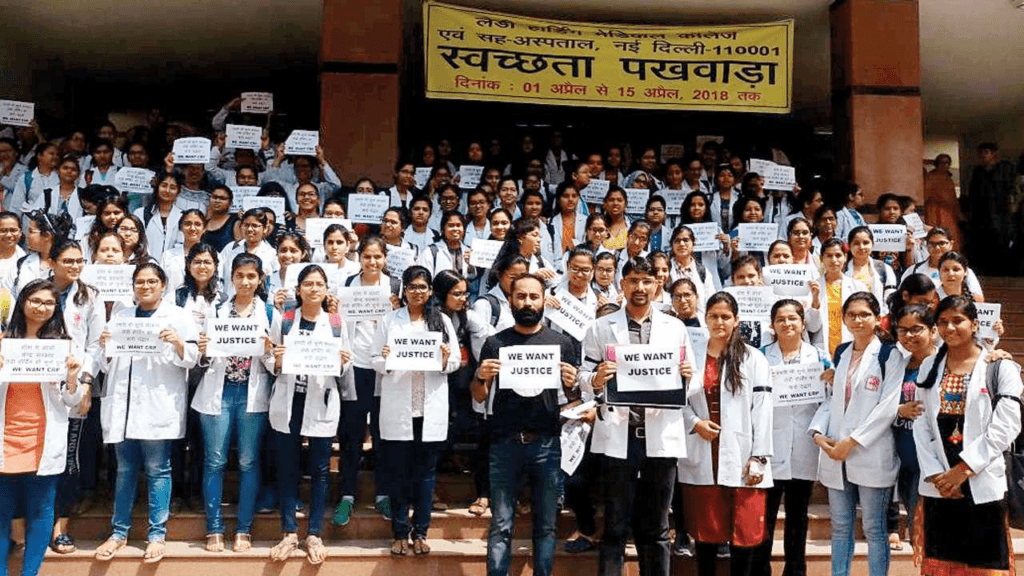
The recent protests at Lady Hardinge Medical College (LHMC), New Delhi, are not an isolated outburst of inconvenience—they are a stark reminder of the systemic neglect that continues to plague medical education infrastructure in India.
At the heart of the issue lies a troubling contradiction: students of Lady Hardinge Medical College who are being trained to uphold the highest standards of health and hygiene are themselves being forced to live in conditions that compromise both.
A Crisis of Basic Dignity
The grievances raised by Lady Hardinge Medical College students are not trivial complaints. They reflect a breakdown of essential living standards:
- Unbearable heat in hostel rooms without access to air conditioning
- Denial of basic infrastructure upgrades, citing outdated wiring
- Contaminated food, with reports of insects, hair, and even maggots
- Stray dogs roaming freely inside hostel corridors and bathrooms
- Non-functional drinking water facilities
This is not merely discomfort—it is a direct threat to health, safety, and dignity.
When students are bitten by stray dogs within hostel premises, when food hygiene becomes questionable, and when extreme heat makes rooms unlivable, the issue transcends inconvenience and enters the realm of institutional failure.

The Irony of Medical Education
Medical students are taught infection control, sanitation, nutrition, and patient safety from day one. Yet, they are forced to navigate:
- Food that violates basic hygiene standards
- Living spaces that fail public health norms
- Safety risks that would be unacceptable in any hospital setting
This contradiction raises an uncomfortable question:
How can a system expect future doctors to uphold standards that it itself fails to provide?
The Deeper Structural Problem
The Lady Hardinge Medical College protest highlights deeper systemic issues:
1. Aging Infrastructure Without Upgradation
Excuses like “old wiring” cannot justify years of inaction. If institutions can expand seats and fees, they must also upgrade facilities.
2. Administrative Apathy
Repeated complaints about heat and facilities reportedly went unanswered for years. This indicates not a lack of awareness—but a lack of will.
3. Neglect of Hostel Life
While academic blocks often receive attention, hostels—where students spend most of their time—remain neglected.
4. Public Health Hypocrisy
Allowing unhygienic food and unsafe living conditions in a medical campus undermines the very foundation of healthcare education.
A Call for Accountability
This issue of Lady Hardinge Medical College demands more than temporary fixes or verbal assurances. It requires institutional accountability at multiple levels:
- Immediate safety measures: Control stray animal access, ensure food safety audits
- Infrastructure overhaul: Upgrade wiring, enable cooling solutions, repair water systems
- Transparent grievance redressal: Time-bound responses to student complaints
- Regular inspections by independent bodies
Most importantly, authorities must recognize that hostel conditions are not a luxury issue—they are a fundamental right.
Beyond Lady Hardinge Medical College: A National Wake-Up Call
LHMC is considered one of the most prestigious government medical colleges in India. If such conditions exist here, it raises a critical concern:
What must be happening in lesser-known or underfunded institutions?
This is no longer about one college—it is about the standard of medical education across the country.
The Bottom Line
Medical students are not asking for privilege—they are demanding basic human living conditions.
If the system continues to ignore these voices, it risks not only the well-being of its students but also the integrity of the healthcare professionals it produces.
Because a system that neglects its future doctors cannot be trusted to care for its patients.
For more details, follow us on X (Twitter), Instagram & Facebook. And our website MED COLLEGE DARSHAN.
No responses yet