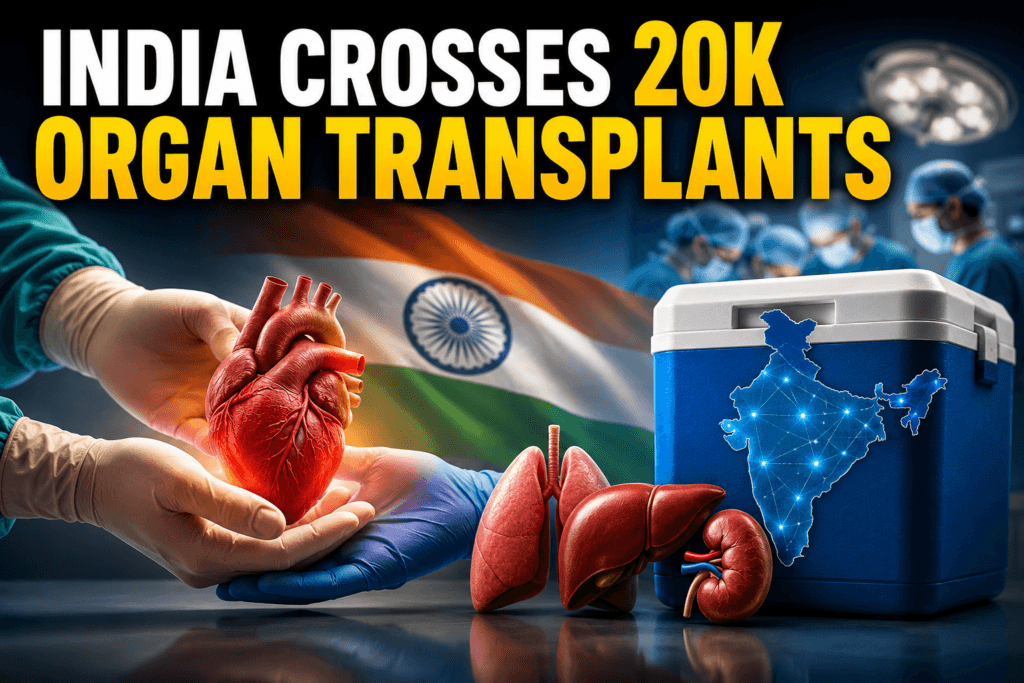
New Delhi: India has achieved a historic milestone in healthcare by performing 20,138 organ transplants in 2025, crossing the 20,000 annual transplant mark for the first time, according to the latest National Organ and Tissue Transplant Organisation (NOTTO) Annual Report. The achievement represents a 6.5% increase over 2024 and marks a remarkable fourfold rise from 4,990 transplants in 2013, reflecting the country’s rapid progress in organ transplantation services.
With this milestone, India has emerged as the third-largest country globally in total organ transplants, behind only the United States and China. The country also continues to hold the No. 1 position worldwide in living donor organ transplants, underlining the growing willingness of families and individuals to donate organs while alive.
Delhi-NCR Leads, Southern States Continue Strong Performance
Among states and Union Territories, Delhi-NCR recorded the highest number of organ transplants in 2025 with 4,564 procedures, followed by:
- Tamil Nadu: 2,796
- Maharashtra: 2,136
- Telangana: 1,523
- Kerala: 1,489
Tamil Nadu also remained the leading state in deceased organ donation, registering 266 deceased donors, followed by Telangana (205), Karnataka (198), Maharashtra (154), and Gujarat (152).
Deceased Organ Donation Still a Major Challenge
Despite the record-breaking numbers, experts say deceased organ donation continues to remain India’s biggest challenge.
The report notes that deceased donor transplants increased from 837 in 2013 to 3,526 in 2025, but this growth is still far below the country’s actual requirement. A substantial gap persists between the number of patients awaiting organ transplants and the availability of donor organs.
Health officials have reiterated that increasing deceased organ donation remains a national priority, particularly considering India’s high burden of patients with end-stage organ failure.
Over Five Lakh Citizens Have Pledged Organ Donation
The report highlights encouraging public participation in organ donation awareness campaigns. Since the launch of the National Digital Organ Donation Pledge Portal in 2023, more than five lakh Aadhaar-verified organ donation pledges have been recorded.
The government has also expanded organ Transplants infrastructure across the country, with transplant services now available in 15 AIIMS institutions. Several AIIMS centres have recently started kidney, liver, and heart transplant programmes, improving access to advanced treatment in different regions.
Policy Reforms Driving Growth
The report credits recent policy reforms under the ‘One Nation, One Policy’ initiative for helping improve access to organ transplantation. These include:
- Removal of domicile restrictions for organ recipients.
- Elimination of upper age limits for organ recipients.
- Waiver of registration fees for patients seeking deceased donor organs.
- Introduction of digital systems for donor registration and organ allocation.
- Strengthened brain stem death certification and swap transplantation guidelines.
These measures aim to simplify the transplant process and ensure more equitable allocation of organs across states.
Significant Untapped Potential
Officials believe India still has enormous potential to increase deceased organ donation. The report notes that with nearly 1.73 lakh road traffic fatalities annually, a large number of medically suitable organs could potentially save thousands of lives if awareness, consent, and retrieval systems continue to improve.
Healthcare experts emphasize that strengthening public awareness, improving hospital-based organ retrieval programmes, and encouraging timely consent from families will be crucial to reducing the gap between organ demand and availability.
A Milestone, But More Work Ahead
India’s achievement of crossing 20,000 annual organ transplants marks a significant milestone in the country’s healthcare journey and demonstrates the success of sustained policy reforms, infrastructure expansion, and public participation. However, experts caution that the country’s transplant ecosystem must now focus on boosting deceased organ donation, which remains the key to meeting the needs of thousands of patients waiting for life-saving transplants every year.
For more details, follow us on X (Twitter), Instagram & Facebook. And our website MED COLLEGE DARSHAN.
No responses yet