NEET-UG 2026, Jaipur/New Delhi:
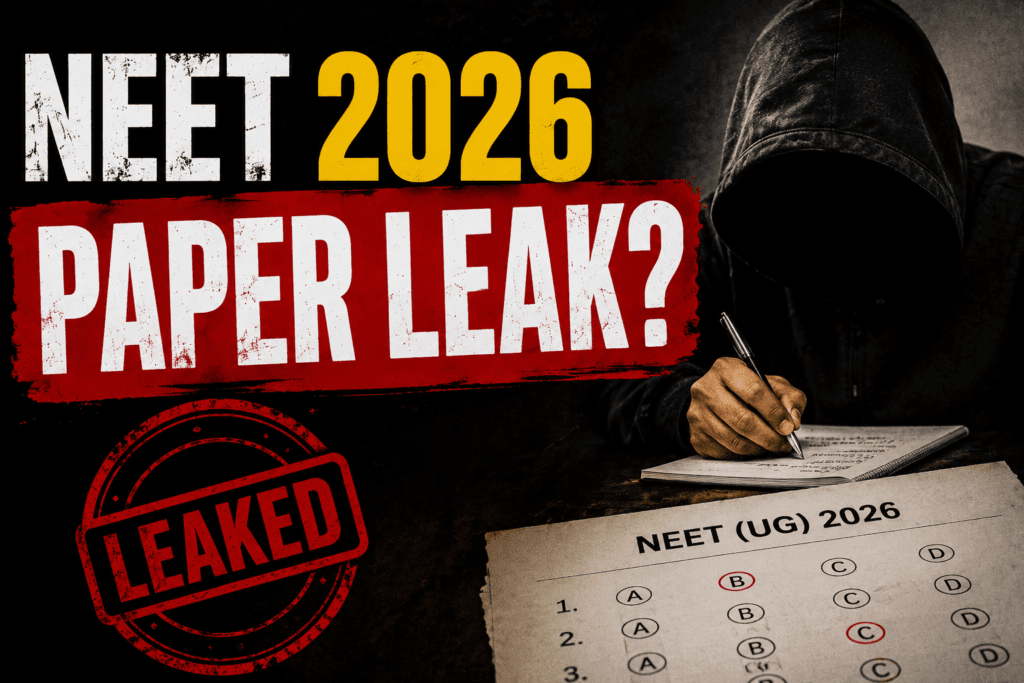
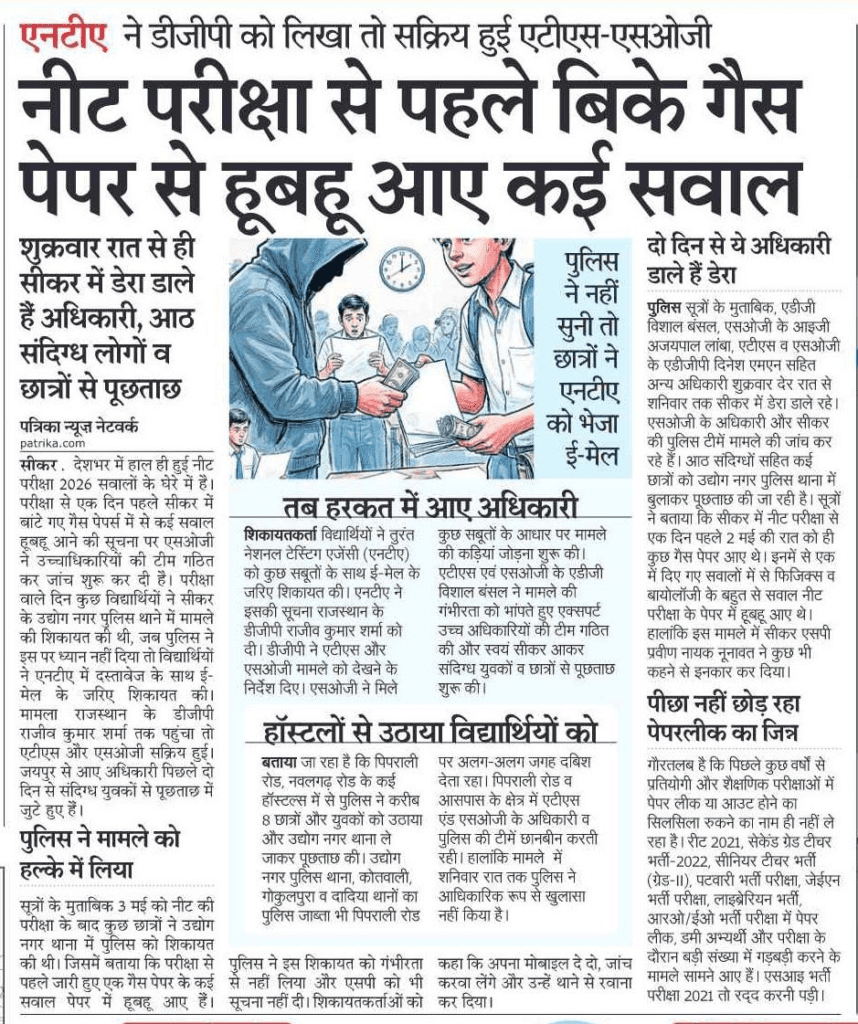
India’s most crucial medical entrance examination, NEET-UG 2026, is once again facing serious credibility concerns after Rajasthan Police’s Special Operations Group (SOG) uncovered evidence suggesting a potentially organized paper leak operation involving a handwritten “guess paper” that reportedly matched nearly 84% of the actual examination paper of NEET-UG 2026.
According to preliminary investigations, the leaked material allegedly contained 140 questions, primarily from Biology and Chemistry, mirroring approximately 600 marks worth of content out of the total 720 marks of NEET-UG 2026. Even more alarming, authorities suspect that the sequence of answer options in the leaked material matched the official paper — a revelation that has intensified public outrage over the integrity of the examination process.
A Disturbing Pattern: Leak Sold for Lakhs Before NEET-UG 2026 Exam
Investigators believe the suspect material was circulated two days before the May 3 examination, with reports suggesting that:
- Initial prices reached ₹5 lakh per candidate
- Prices dropped to ₹30,000 just before the exam
- The material spread through PG accommodations, coaching-linked networks, and career counselors
- Students may have had access to critical exam content well before entering centers
The suspected chain reportedly began with an MBBS student from Churu studying in Kerala, whose handwritten paper was forwarded through Sikar-based associates before reaching aspirants.
NTA’s Familiar Response: Delay, Denial, and Damage Control
The National Testing Agency (NTA) has acknowledged awareness of the alleged malpractice only four days after the exam, once again reinforcing concerns regarding delayed intervention and reactive governance.
For millions of aspirants, this pattern is becoming painfully repetitive:
Every year:
- Allegations emerge
- Students protest
- Investigations begin late
- NTA initially denies widespread compromise
- Accountability remains unclear
The larger question remains:
How many times must exam integrity be questioned before structural reform is implemented?
A Crisis of Trust
NEET is not just another examination — it determines the future of India’s healthcare workforce.
When repeated allegations of leaks, proxy networks, and compromised fairness surface year after year, the consequences are devastating:
- Honest students lose trust
- Meritocracy is undermined
- Mental health crises deepen among aspirants
- Coaching mafias grow stronger
- Public confidence in national examinations collapses
For genuine candidates who spent years preparing, the possibility that others may have purchased access to high-value questions is not merely unfair — it is a direct assault on equal opportunity.
NTA’s Negligence Under Fire
Critics argue that NTA’s continued pattern reflects:
1. Systemic Security Weakness
Repeated exam controversies suggest insufficient preventive mechanisms.
2. Delayed Crisis Recognition
Acknowledging malpractice only after external investigations signals institutional passivity.
3. Defensive Governance
Rather than proactively restoring trust, responses often appear focused on minimizing reputational damage.
4. Failure to Learn from Previous Scandals
After multiple annual controversies, stronger anti-leak systems should already be in place.
Demand for RE-NEET Gains Momentum
In light of the seriousness of these allegations, students, parents, and activists are increasingly demanding:
- Immediate FIR implementation against all involved
- Transparent nationwide investigation
- Public disclosure of digital evidence
- Strict crackdown on coaching and counseling networks involved
- Cancellation of compromised results if large-scale malpractice is proven
- RE-NEET (re-examination) to ensure fairness for all genuine aspirants
Why Re-NEET May Be Necessary
If investigations confirm large-scale access to authentic questions before the exam, allowing results to stand could permanently damage:
- Institutional legitimacy
- Student morale
- Public trust in competitive exams
A re-examination, though logistically challenging, may be the only way to preserve fairness and constitutional equality.
Conclusion: Another Year, Another NEET Crisis
The alleged NEET-UG 2026 paper leak is not an isolated controversy — it reflects a dangerous recurring failure in safeguarding one of India’s most important examinations.
As evidence mounts, NTA’s delayed response and apparent denial risk reinforcing public perception that systemic negligence is being normalized.
If exam integrity cannot be guaranteed, then accountability must be.
India’s medical aspirants deserve more than reassurances after every scandal — they deserve a transparent, secure, and corruption-free examination system.
The time has come for decisive action, not another cycle of denial.
For more details on NEET-UG 2026 , follow us on X (Twitter), Instagram & Facebook. And our website MED COLLEGE DARSHAN.

No responses yet