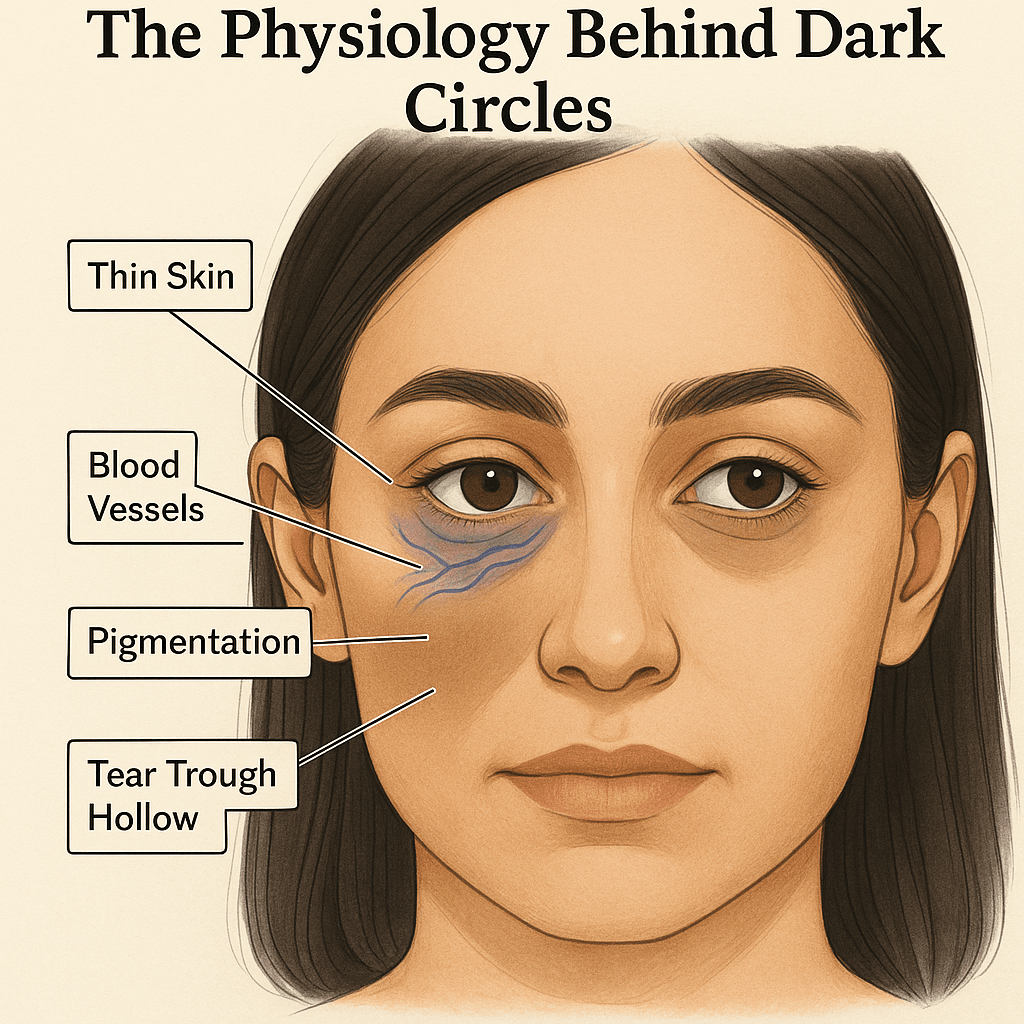
Dark circles are one of those universal little mysteries — they show up after a late night, during stressful weeks, or sometimes for no obvious reason at all. But behind those shadows lies an interesting bit of human physiology.
- The Skin Under Your Eyes Is Naturally the Thinnest
The first thing to know is that the skin under the eyes is almost paper-thin — much thinner than the skin on the cheeks or forehead.
Because it’s so thin:
- Blood vessels underneath become more visible
- Any change in blood flow or pigmentation shows up quickly
- Even mild swelling can cast a shadow
2. Blood Flow and Oxygen Levels Make a Huge Difference
Ever wonder why dark circles sometimes look blue or purple?
That color often comes from the venous blood (deoxygenated blood) beneath the eye area. When blood circulates slowly or pools —common during fatigue or stress — the darker color becomes more noticeable through the thin skin.
Why blood pools there:
- Lack of sleep reduces lymphatic drainage
- Stress increases cortisol, affecting blood vessel tone
- Allergies cause rubbing and congestion, increasing blood flow
When the tiny veins are dilated or congested, they show up like a shadowy watercolor under the eyes.
3. Pigmentation: When Melanin Gets Involved
Not all dark circles are from blood vessels. Some are caused by actual pigmentation in the skin — particularly common in Indian, Middle eastern, and darker skin tones.
This is called periorbital hyperpigmentation.
It happens when:
- Skin cells produce extra melanin
- Inflammation (from rubbing or allergies) triggers pigment
- Genetics influence baseline melanin activity
These circles tend to look brown rather than bluish and don’t change much day-to-day.
4. Collagen Loss and Aging Deepen the Shadows
As we age, the body naturally produces less collagen and elastin, the proteins that keep skin thick and bouncy.
Thinner skin = more visibility of the underlying anatomy
Plus, aging causes volume loss in the face, especially below the eyes. This creates a tear trough hollow, and the hollow casts a shadow— making the dark circle appear worse even without pigmentation changes.
So sometimes, the color isn’t darker — the contour just enhances the appearance.
5. Fluid Retention Can Create the “Puffy + Shadow” Combo
Salt-heavy meals, crying, PMS, or poor sleep can make the under-eye area hold extra fluid.
The puffiness creates:
- Swelling
- Stretching of the skin
- A shadow where the swelling meets the cheek
Once again, the shadow effect tricks the eye into perceiving darkness.
6. Genetics: The Invisible Hand Behind Dark Circles
Some people are simply born with:
- Thinner under-eye skin
- More prominent blood vessels
- Naturally darker pigmentation
- Deep tear troughs
- A family pattern of dark circles
In these cases, dark circles appear early in life and persist regardless of sleep or lifestyle.
7. Lifestyle Factors That Amplify the Physiology of Dark Circles
While they’re not the root cause, certain habits amplify what’s already happening:
- Lack of sleep → slower blood flow, puffiness
- Screen time → eye strain increases periorbital blood flow
- Dehydration → skin appears dull and thin
- Sun exposure → increases melanin production
- Rubbing eyes → inflammation + pigmentation
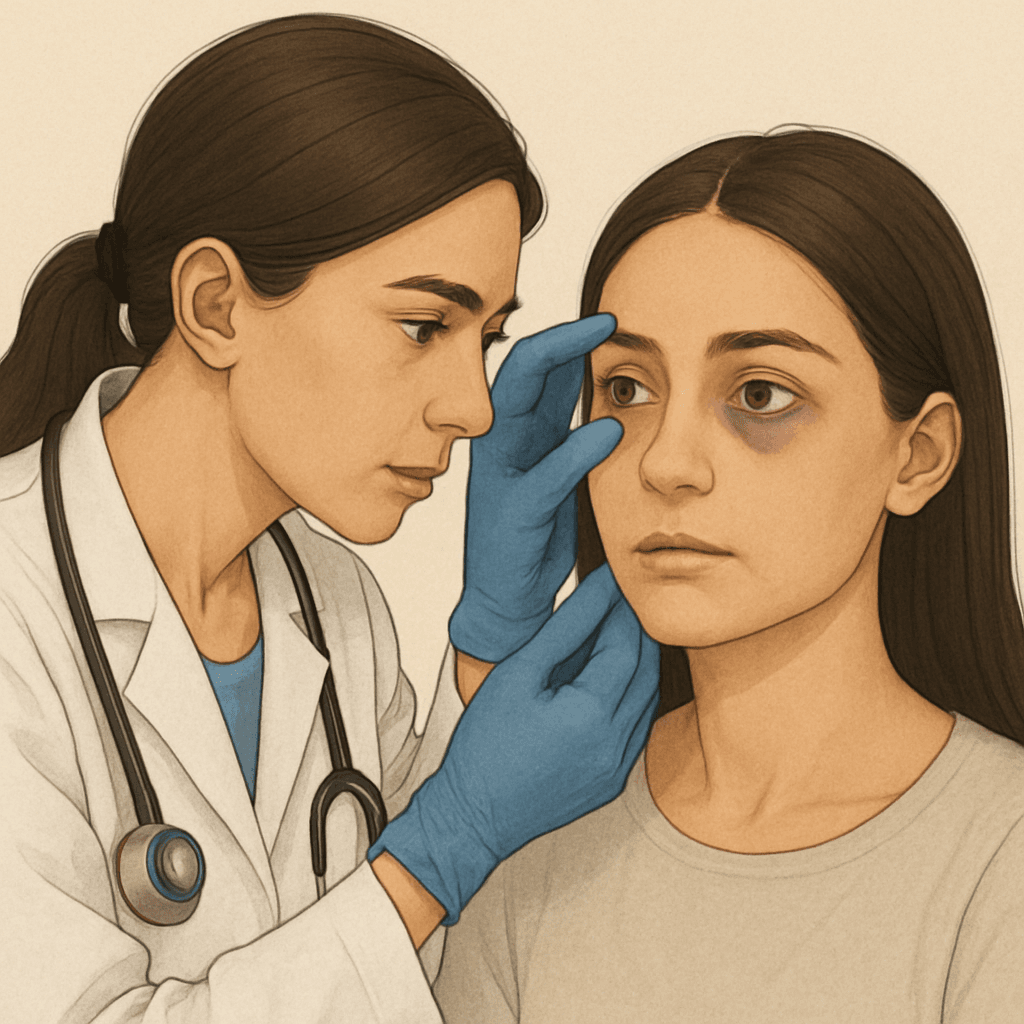
Dermatologically correct facts about Dark Circles :
Periorbital hyperpigmentation (POH)—commonly referred to as dark circles—is a multifactorial condition involving a combination of vascular, structural, and
pigmentary changes in the periorbital region. The skin around the eyes is uniquely thin and physiologically distinct, making underlying anatomical and biochemical
processes more visible.
- Anatomical Factors
a. Thin Periorbital Dermis
The eyelid skin measures approximately 0.5 mm, making it the thinnest skin on the body. Reduced dermal thickness allows enhanced visualization of:
Subcutaneous vasculature
Orbicularis oculi muscle
Subdermal structural irregularities
This intrinsic thinness amplifies any vascular congestion or pigment deposition.
b. Tear Trough Deformity
Age-related volume loss in the sub-orbicularis oculi fat (SOOF) and midface results in a depression at the medial infraorbital rim. This creates a shadowing effect,
clinically referred to as a “structural dark circle,” even in the absence of true pigmentation or vascular prominence. - Vascular Etiology
a. Prominent Subcutaneous Vasculature
Because of the thin epidermis and dermis, venous stasis and dilated capillaries become visible, imparting a blue, purple, or violet hue. Factors contributing to vascular
pooling include:
Sleep deprivation (reduced microcirculation)
Allergic rhinitis (periorbital congestion)
Atopy and chronic eye rubbing
Stress-induced vascular dilation
The Tyndall effect enhances the bluish appearance as light scatters through the thin tissue.
b. Increased Hemoglobin Breakdown
Periorbital iron deposition resulting from increased hemoglobin degradation (hemosiderin) may occur in chronic vascular congestion, deepening discoloration. - Pigmentary Etiology
Periorbital hypermelanosis is common in individuals with Fitzpatrick skin phototypes IV–VI.
a. Epidermal and Dermal Melanin
Melanin accumulation may be due to:
Genetic predisposition
Post-inflammatory hyperpigmentation (PIH) from rubbing, eczema, or allergies
Chronic UV exposure increasing melanogenic activity
Epidermal pigmentation appears brown and intensifies under Wood’s lamp; dermal pigmentation appears grayish. - Structural and Age-Related Changes
a. Dermal Thinning
Decline in collagen, elastin, and glycosaminoglycans reduces dermal density, increasing translucency and emphasizing underlying
vessels.
b. Fat Redistribution
Aging leads to herniation of orbital fat and midface descent. The resulting:
Bulging fat bags
Adjacent hollowing
create a distinct light–shadow contrast, contributing to perceived darkness. - Edematous Component
Transient periorbital edema from:
High sodium intake
Hormonal fluctuations
Crying
Inadequate lymphatic drainage
accentuates shadowing and dermal stretching, worsening the appearance of pigmentation. - Genetic and Ethnic Predisposition
Genetics influence:
Baseline dermal thickness
Periorbital hollowness
Vascular visibility
Melanin distribution
Tendencies toward atopy or chronic inflammation
For more updates, follow us on X (Twitter), Instagram & Facebook. And our website MED COLLEGE DARSHAN.

No responses yet