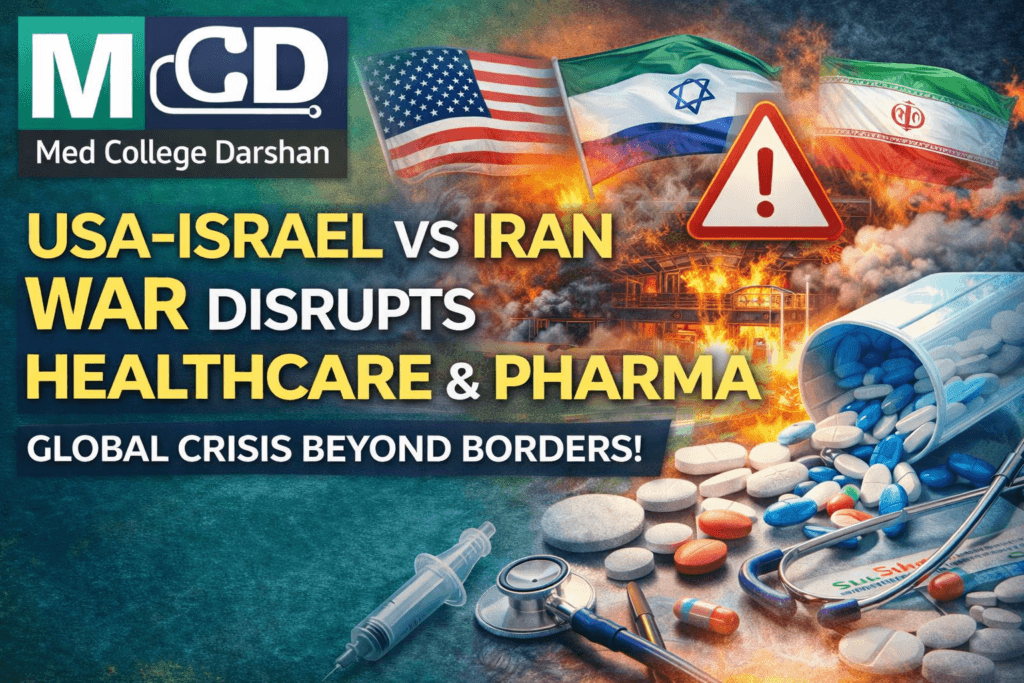
The ongoing conflict involving the United States, Israel, and Iran is no longer confined to geopolitical or military consequences—it has rapidly evolved into a global healthcare crisis. From disrupted drug supply chains to rising treatment costs and attacks on medical infrastructure, the war is exposing the deep interdependence between global health systems and geopolitical stability.
1. Collapse of Healthcare Infrastructure in Conflict Zones
One of the most immediate and devastating impacts of the war has been on healthcare systems within affected regions. Reports indicate multiple attacks on healthcare facilities, including hospitals and vaccine-producing institutions, raising serious humanitarian and ethical concerns. (BMJ)
Destruction of:
- Hospitals
- Vaccine production centers
- Public health laboratories
has significantly weakened the ability to respond to emergencies, outbreaks, and routine care. This not only affects local populations but also threatens global disease surveillance systems, increasing the risk of uncontrolled epidemics.
2. Global Disruption of Medicine Supply Chains
The Middle East is a critical hub for global pharmaceutical logistics, especially via routes like the Strait of Hormuz. The war has disrupted these pathways, leading to delays and shortages of essential medicines worldwide. (www.ndtv.com)
Key impacts include:
- Delayed delivery of cancer drugs, insulin, and biologics
- Increased transport and insurance costs (up to 30% higher) (www.ndtv.com)
- Interrupted clinical trials dependent on time-sensitive drug supply (Axios)
Even countries not directly involved in the conflict—such as India, the UK, and African nations—are facing spillover effects.
3. Shortage of Raw Materials & APIs
Pharmaceutical production relies heavily on:
- Active Pharmaceutical Ingredients (APIs)
- Solvents and petrochemical derivatives
The conflict has disrupted the supply of these critical inputs, particularly from Gulf countries. (The Economic Times)
Consequences include:
- Reduced drug manufacturing capacity
- Delays in production cycles
- Increased dependency on alternative, often costlier sources
Experts warn that supply chains may take months to stabilize, even after the conflict subsides. (The Economic Times)
4. Rising Cost of Healthcare & Medicines
The war has triggered a surge in:
- Oil prices
- Transportation costs
- Raw material costs
This has directly translated into higher healthcare expenses. Medical supplies such as syringes, gloves, and catheters have already seen noticeable price hikes, with further increases expected. (The Times of India)
Projected impacts:
- 20–25% increase in drug prices
- Increased hospital operational costs
- Higher out-of-pocket expenditure for patients
For developing countries, this could mean reduced access to life-saving treatments.
5. Humanitarian Crisis & Restricted Access to Care
The war has severely affected humanitarian aid delivery, with medicines and vaccines failing to reach vulnerable populations. (AP News)
Challenges include:
- Blocked shipping routes
- Increased fuel and logistics costs
- Delays in emergency medical aid
This has worsened conditions in already fragile regions, pushing millions closer to healthcare insecurity.
6. Impact on Global Pharmaceutical Industry
The pharmaceutical industry is facing a multi-dimensional crisis:
a. Supply Chain Fragility
The war has exposed how dependent pharma is on geopolitically sensitive regions.
b. Margin Pressure
- Rising costs of APIs and logistics
- Increased insurance premiums
- Reduced profit margins
c. Production Delays
Manufacturers are struggling with:
- Extended delivery timelines
- Inventory shortages
- Uncertain supply availability
d. Strategic Shift
Companies may now:
- Diversify supply chains
- Increase domestic production
- Build larger inventories
7. Long-Term Implications
The conflict could reshape global healthcare and pharma in the long run:
- Decentralization of drug manufacturing
- Increased focus on self-reliance (Atmanirbhar Pharma)
- Stronger regulations on drug supply security
- Greater investment in healthcare infrastructure resilience
Conclusion
The USA–Israel vs Iran war has revealed a crucial reality:
👉 Healthcare systems are as vulnerable to geopolitical conflicts as they are to pandemics.
From drug shortages to rising costs and collapsing healthcare infrastructure, the ripple effects of this war are being felt across the globe. It is no longer just a regional conflict—it is a global health emergency in the making.
Ensuring resilient supply chains, protecting medical neutrality, and prioritizing healthcare access must now become global policy priorities, because in times of war, it is ultimately the patients who suffer the most.
For more details, follow us on X (Twitter), Instagram & Facebook. And our website MED COLLEGE DARSHAN.

No responses yet